
India will now face a lower reciprocal tariff of 10 per cent, down from 25 per cent, after US President Donald Trump announced a new global levy on items imported into America in the wake of the Supreme Court verdict against his sweeping duties on several nations.

With an eye to the large and growing market for their products, Indian auto component and tyre companies are making a beeline to set shop in Europe (especially Eastern Europe). Just last month Apollo Tyres announced that it was setting up a euro 200 million green field venture outside Hungary. And Delhi based Amtek Auto will set up a production base which will come in to operation in 2009 in Romania.

To be able to tide over the current crisis, automobile manufacturers have waged a war against all cost heads.

A nationwide strike called by central trade unions saw a mixed response across India, impacting various sectors and states differently, with some areas experiencing disruptions while others remained largely unaffected.
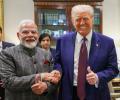
The agreement addresses non-tariff barriers and promotes increased trade in technology products and cooperation between the two countries.

Automobile industry body SIAM on Monday lowered its vehicle sales growth forecast for FY'12 to 11-13 per cent from 12-15 per cent announced three months earlier, mainly due to higher interest rates and rising fuel prices.

Domestic passenger vehicle dispatches from companies to dealers rose 13 per cent year-on-year to 449,616 units in January with demand remaining robust owing to GST rate rationalisation and subsequent dip in prices, industry body SIAM said on Friday.

Restoring weighted tax deductions and adopting a petty patents regime can foster firm-level innovative activity critical for competitiveness, points out Nagesh Kumar.

A host of macroeconomic data announcements, global trends and trading activity of foreign investors would dictate investors' sentiment in the stock market this week, analysts said. Besides, auto sales data will be closely tracked, experts noted.
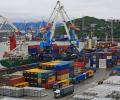
US and India will promptly implement this framework and work towards finalising the interim agreement with a view to concluding a mutually beneficial bilateral trade agreement.
Despite of reoccurring crisis in 2013, there were many auto-giants that did well in sales due to some of their impeccable mean machines. Here are some of the top gainers of 2013.

Among Sensex firms, Mahindra & Mahindra, Asian Paints, Infosys, Titan, Sun Pharma, Tata Consultancy Services, Tech Mahindra and Power Grid were the major laggards. However, Bajaj Finance, Eternal, UltraTech Cement and Reliance Industries were among the gainers.

Stock market is gearing up for an eventful week ahead where key triggers such as quarterly earnings from corporates, the US Fed interest rate decision and the upcoming Union Budget for 2026-27 would grab the limelight, analysts said.

Passenger vehicle dispatches from companies to dealers rose 4 per cent year-on-year in September to 372,458 units, industry body SIAM said on Wednesday. The overall passenger vehicle dispatches last month rose 4.4 per cent to 372,458 units, as against 356,752 units in September 2024.

Both countries commit to provide each other preferential market access in sectors of respective interest on a sustained basis

The fiscal tilt towards capex benefits companies in investment-related sectors like capital goods, defence equipment, engineering & construction and metal & mining. The planned cut in revenue expenditure will weigh on companies in consumption sectors like FMCG, consumer durables and retail.

European wines are set to enter the Indian market at lower prices under the bilateral free trade agreement as India will provide import duty concessions under the pact, an official said. Under the pact, the duty on EU wines would fall from 150 per cent to 20 per cent (for expensive ones).

India's electric two-wheeler (e2W) manufacturers have urged the government to extend subsidies under the PM E-Drive (Electric Drive Revolution in Innovative Vehicle Enhancement) scheme beyond March 2026, cautioning that a withdrawal could slow near-term demand even as confidence in long-term electric mobility adoption remains intact.

New Delhi will substantially reduce tariffs on industrial and agricultural goods while continuing to protect sensitive sectors. Tariffs on some agricultural products that are not traditionally considered sensitive will be brought down to zero, while in the case of relatively sensitive items, duties will be reduced in a graded manner and quotas will be imposed.

The BSE Smallcap index hit an over eight-month low of 47,627.96, falling 3 per cent in Tuesday's intraday trade amid selling pressure due to ongoing tariff-related concerns and rising geopolitical tensions.

Kerala has overtaken more industrialised states in personal electric vehicle adoption, driven by strong middle-class uptake, policy support, and charging infrastructure.

India and the European Union are set to announce on January 27 the conclusion of negotiations and finalisation of a free trade agreement, which is aimed at boosting economic ties between the two regions amid disruptions in global trade due to US tariffs, an official said.

Shares of tyre manufacturers have outperformed broader equity benchmarks, buoyed by multiple tailwinds. Softer raw material prices, an uptick in demand from automakers following the reduction of the goods and services tax (GST) rates, and steady replacement demand have lifted sentiment toward the sector.

The demand for passenger vehicles (PVs) is expected to sustain even beyond the ongoing festival season as a new set of customers, those who gained confidence to buy cars following the recent GST rate cuts, will begin to visit dealerships now, said Shailesh Chandra, president of the Society of Indian Automobile Manufacturers (Siam), on Wednesday.

For the first time, the event will take place across three locations in Delhi: Bharat Mandapam at Pragati Maidan, Yashobhoomi Convention Centre at Dwarka, and India Expo Mart at Greater Noida.

Mexico on Thursday imposed a tariff of up to 50 per cent on imports from its non-preferential trade partners, including India, a move that might hit New Delhi's annual $5.75 billion shipments to its third-largest car export market.
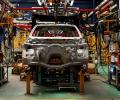
Indian auto component exporters may suffer a hit of 2,700 crore to 4,500 crore on their earnings after the imposition of steep US tariffs on key automotive parts, credit rating agency ICRA said in a note on Monday. The new 25 per cent tariff on engines, transmission, electrical components, and other auto parts may moderate the overall auto component industry's revenue growth to 6-8 per cent in 2025-26 (FY26), down from an earlier projection of 8-10 per cent.
Passenger vehicle dispatches from companies to dealers in the domestic market declined marginally year-on-year in July, hit by muted demand, industry body SIAM said on Thursday. Passenger vehicle dispatches declined to 340,772 units in July, compared to 341,510 units in the same month last year.

Brokerages expect the company to continue outperforming in the auto segment, driven by launches and the strong trajectory of healthy bookings.

After two years of strong gains, smallcap stocks fell sharply in 2025, but the correction may be setting up opportunities for long-term investors.
It signals a major jump in the global acceptance of India as a hub for small cars, but maintaining this will require a lot more including, for starters, large production volumes.
A slowdown in the automobile industry is set to reverse by the year-end. The slowdown, which is cyclical in nature and occurs after every seven years, should come to an end in the next three months, according to the Society of Indian Automobile Manufacturers (SIAM), the country's apex automobile body.
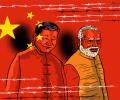
India's trade deficit with China is expected to reach $106 billion in 2025 as imports are rising faster than the country's exports to the neighbouring country, think tank GTRI said on Friday.

The government is working to make India's automobile industry number one in the world within five years, Union Minister Nitin Gadkari said on Monday. Inaugurating the 'International Value Summit 2025', Gadkari said the automobile sector pays maximum GST revenue to the government and generates employment opportunities.

The country's largest carmaker Maruti Suzuki India expects auto sales to bounce back to the glory days of 7 per cent growth by FY 27, helped by the proposed GST rate cut which is expected to bring down car prices by 3.5 to 8.5 per cent.

The next many decades belong to India as the global economic powerhouse, and it will be essential to continue demonstrating policy stability, as the country aspires to be the world's manufacturing hub, Maruti Suzuki India MD and CEO Hisashi Takeuchi said on Friday.
Part of government strategy to push demand.

Mahindra & Mahindra on Tuesday posted a 28 per cent year-on-year increase in its consolidated profit after tax to Rs 3,673 crore for the second quarter ended September 30, 2025, driven by robust performance of the farm sector, while also seeing the impact of the GST transition on the auto sector. The company reported a profit after tax (PAT) of Rs 2,867 crore for the July-September period of the last fiscal.

India has been on an FTA-signing spree of late. Since 2021, it has signed eight trade agreements, three of which -- with the UK, Oman and New Zealand -- were finalised in 2025 alone.
